


AAC in High-Rise Construction: Structural and Fire Safety Benefits for AAC Block Plant Projects
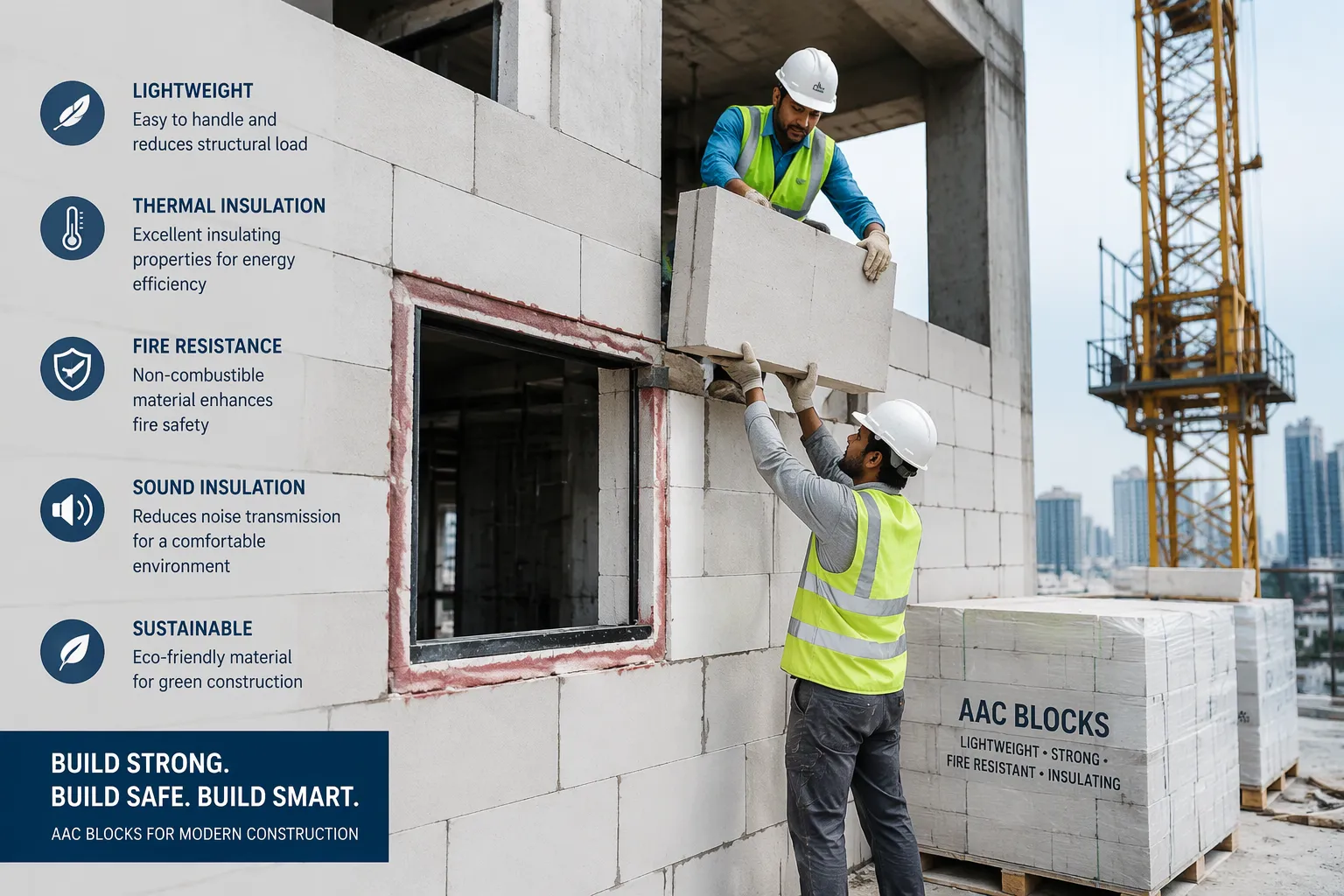
Yes, AAC blocks meet high-rise building needs when they are correctly chosen and made. Structural performance and fire safety are the two main supports that decide if a project will work. Both depend on steady output from a dependable AAC block plant. Planners check AAC blocks for compressive strength and non-combustible behavior. These proven AAC properties make AAC reliable for tall buildings.
Key Takeaways
AAC blocks are strong and light, so they support tall buildings without making the frame too heavy.
AAC blocks do not burn and can resist fire for up to six hours, keeping buildings safe.
Choose AAC blocks from a certified plant to ensure consistent quality and safety.
Structural Strength of AAC Blocks in High-Rise Construction
Compressive Strength and Load-Bearing Capacity
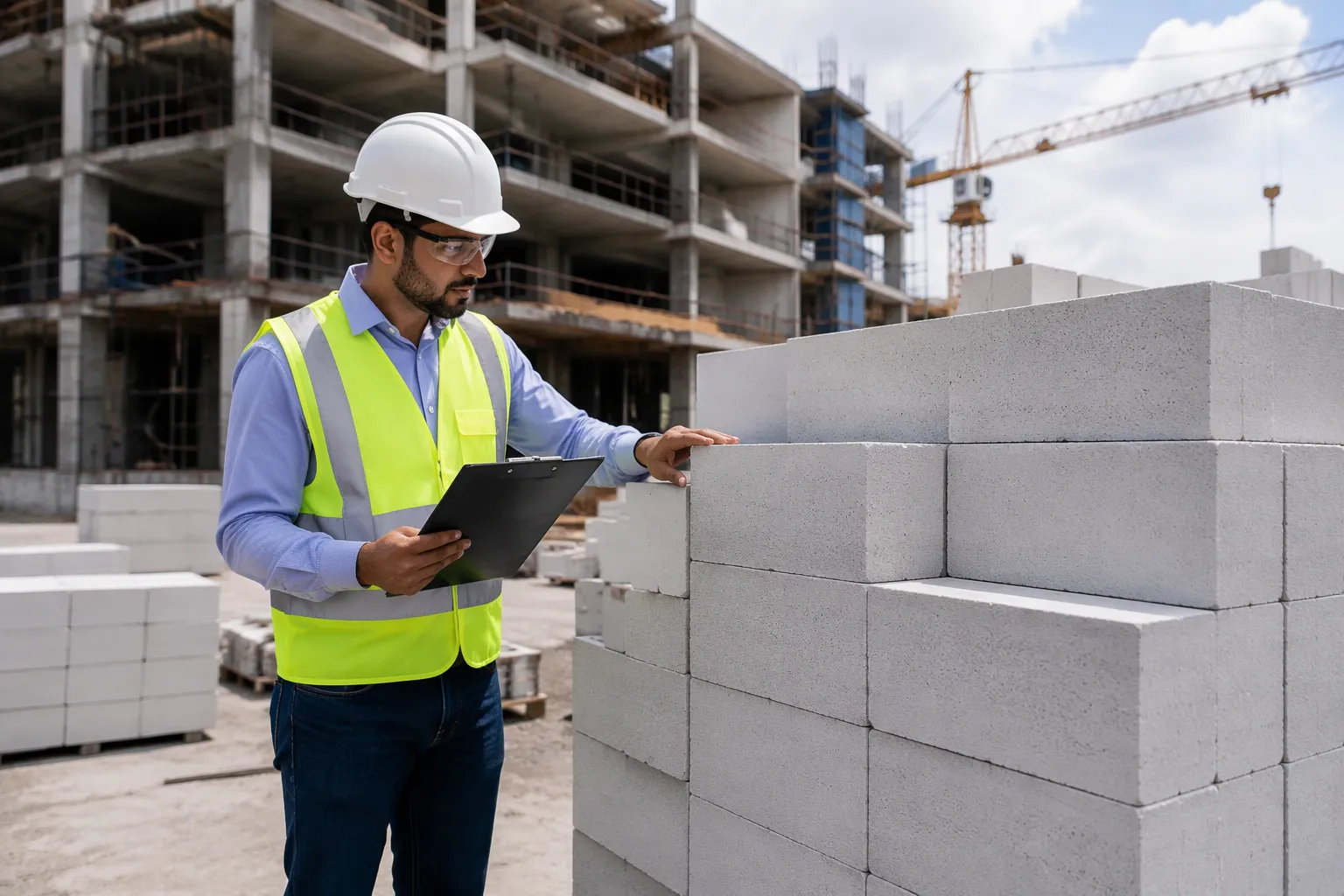
Compressive strength shows how much squeezing force a block can take before it cracks. AAC blocks get their strength from a mineral mix of lime, cement, sand, and rising air bubbles. This mix gives AAC low density and a high strength-to-weight ratio. A lighter block carries the same structural load with less dead weight on columns and foundations. This balance lets AAC blocks serve multi-storey buildings without making the frame too big. Engineers check the strength of AAC blocks against project drawings and the IS 2185 Part 3 standard before approval.
Dimensional Accuracy and AAC Block Plant Quality
Precision at the plant decides how well AAC blocks work on site. Thin-bed mortar joints need tight tolerances, and standard AAC blocks dimensions must stay the same from batch to batch. The Tirumala project in India shows the payoff. Over 12 years of production, Teeyer equipment gave dimensional accuracy, steady operation, and a high product qualification rate. The factory now upgrades from 900 to 1,500 cubic meters per day. Buyers should check ISO 9001 certification, routine cube testing, and batch records at the aac block plant. Reliable aac block manufacturing starts with disciplined aac production. Teeyer AAC Solutions supports this goal through feasibility studies, customized plant design, and EPC delivery. These services help manufacturing plants keep block quality steady across every shift.
Strong aac blocks support safe aac block construction in high-rise construction projects. Aerated concrete blocks lower structural load and speed up multi-storey construction. Dependable aac block manufacturing protects structural integrity in multi-storey structures. Teams that plan multi-storey construction around verified aac production get results they can predict. The same discipline serves multi-storey buildings of every height. Each aac block plant that controls tolerances makes multi-storey buildings safer. Good aac blocks reward careful specification in multi-storey construction. Sound aac blocks keep multi-storey buildings on schedule. Verified aac blocks make multi-storey construction approvals easier. Quality aac blocks hold up every multi-storey buildings design.
Fire Safety of Autoclaved Aerated Concrete
Non-Combustible Performance and Fire Ratings
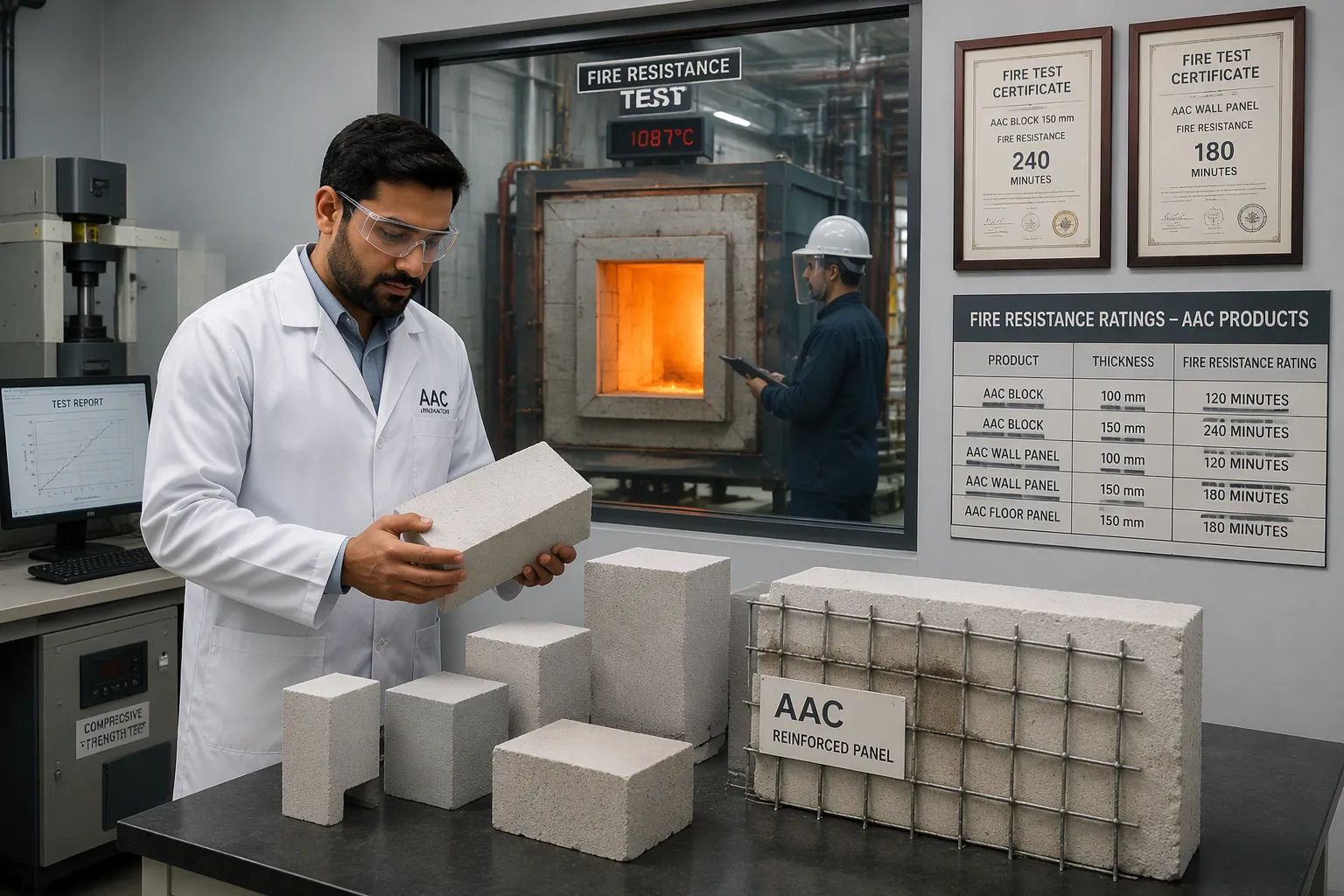
Autoclaved aerated concrete is a good fit for tall buildings because of its mineral makeup. AAC is made of lime, cement, sand, and air pockets, so it cannot burn. It gives off no harmful gases when there is a fire. AAC melts at over 1,600°C, which is much hotter than any building fire gets. Standard furnace tests give AAC up to six hours of passive fire protection. That rating gives designers plenty of room for compartment walls, shafts, and escape routes. Fire resistance depends on wall thickness, density, and detailing, so engineers check the rating against the test report for the exact assembly. A plant that controls density and curing keeps these fire resistance properties steady from batch to batch. Buyers should ask for fire test certificates along with routine cube results from the aac block plant.
Thermal Insulation and Reinforced Autoclaved Aerated Concrete
The porous structure of AAC slows heat flow, and the same air pockets absorb sound. These fire-resistant properties help with comfort and safety at the same time. AAC blocks are light, so they reduce dead load on the frame and cut labor on site. Reinforced autoclaved aerated concrete panels carry steel mesh for wall and floor uses. The mesh sits behind a protective layer of AAC, and the cover depth controls how long the steel keeps its strength when exposed to fire. Designers check that cover against the fire resistance period the element needs. Reinforcement adds structural capacity, and the AAC around it shields it under standard test conditions. Teams choose reinforced autoclaved aerated concrete for panels that need both load capacity and a fire rating.
Project economics support the safety case too. AAC blocks and panels install fast, lower dead load, and cut labor costs. Green separation technology improves output quality at the plant. The NCC Bahrain project delivered 300,000 sqm of annual capacity as the largest line in the GCC region. The UNITON project in Kazakhstan reached 180,000 m³ per year in 11 months. Both plants supply autoclaved aerated concrete projects at scale. Teeyer AAC Solutions adds MES monitoring and Teeyer Academy training to keep aac production steady. Aerated concrete blocks work well for multi-storey buildings, and aac block construction moves quickly. Multi-storey buildings benefit from aac blocks with verified fire resistance. Fire safety in multi-storey buildings starts with tested aac. Good aac production protects every floor. Reliable aac supports safe multi-storey buildings. Careful aac detailing completes the fire strategy. Strong aac performance rewards early planning.
AAC is a modern, safe, and efficient choice for high-rise projects. Structural strength, fire safety, and project economics all back each other up. A well-run aac block plant brings all three together. Teams should compare aac performance with their own project needs. Careful review of aac properties pays off in every high-rise design. Verified aac data helps teams make confident decisions. Strong aac results speak for themselves.
FAQ
AAC performance depends on plant discipline. These answers cover AAC strength, AAC fire ratings, and AAC quality checks.
Are AAC blocks strong enough for tall buildings?
Yes. AAC carries multi-storey loads through a high strength-to-weight ratio. AAC strength follows IS 2185 Part 3. Engineers verify AAC data before approval. AAC suits high-rise frames.
How long does AAC resist fire?
AAC is non-combustible. AAC melts above 1,600°C. Standard tests give AAC up to six hours of passive protection. AAC wall thickness sets the exact rating. AAC releases no toxic gas.
What should buyers verify at an AAC block plant?
Buyers check ISO 9001 certification and AAC cube tests. Steady aac block manufacturing keeps AAC density stable. Tirumala shows 12 years of steady AAC output. AAC batch records prove quality.


