Key Advantages and Applications of Autoclaved Aerated Concrete Panels
2026-10-14
View:1
Autoclaved lightweight concrete panels are a strong, lightweight building material. Makers make them from autoclaved aerated concrete. This article looks at the main benefits of AAC panels and how they are used in building. You will see how AAC panel production has changed to meet the need for green building solutions. Know more "what is AAC", Click this article.
Key Takeaways
AAC panels are lightweight and strong. They weigh much less than bricks or concrete. This makes building faster and easier.
AAC panels save energy and resist fire. They keep buildings comfortable and safe. This lowers your energy bills over time.
Teeyer helps you start AAC production. They provide full support from planning to operation. You can build quickly and sustainably.
Understanding Autoclaved Aerated Concrete Panels
Composition and Manufacturing Process of AAC Panels
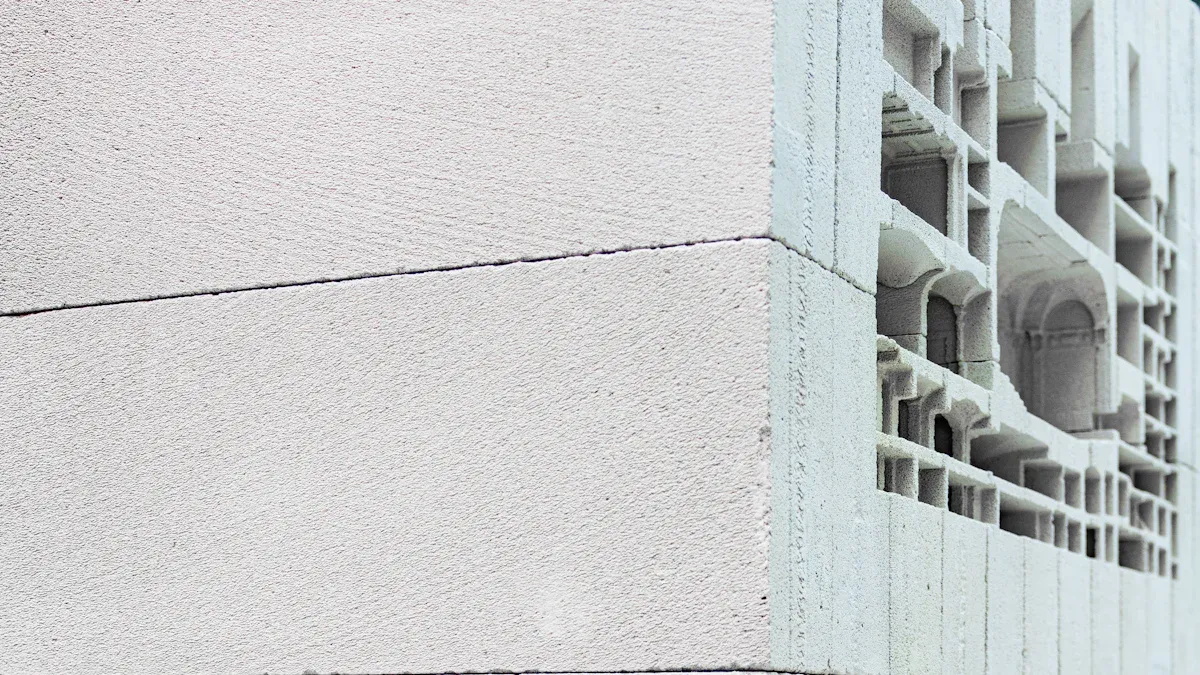
You will find that autoclaved aerated concrete comes from a careful mix of quartz sand, fly ash, lime, cement, gypsum, and aluminum powder. The aluminum powder works as a gassing agent. It reacts with calcium hydroxide in an alkaline setting and makes hydrogen gas. This gas grows the slurry and creates millions of tiny air pores. The makeup of AAC panels gives them a cellular structure. This structure makes them lightweight, porous prefabricated building elements with strong insulating properties.
The manufacturing process of AAC panels follows clear steps. Raw materials go through grinding and batching first. The slurry then moves to mixing and pouring into molds. Pre-curing happens at controlled temperature for about two to two and a half hours. Steel mesh fabrication takes place at the same time for reinforced panels. Cutting comes next with wire precision. The autoclaving process uses saturated steam at 180 to 200 degrees Celsius and 1.0 to 1.3 MPa pressure for 8 to 10 hours. Finished product packing wraps up the line.
From Raw Materials to Finished Panels
Teeyer provides complete AAC production line solutions that cover every stage. These stages include raw material processing, automatic steel mesh fabricating and circulation, batching and pre-curing, cutting, autoclaving, and finished product packing. This full coverage keeps AAC panel production running smoothly from start to finish. The equipment handles both AAC panels and blocks with equal efficiency.
Teeyer AAC Solutions also includes pre-investment services. You receive raw material analysis, feasibility studies, and ROI analysis before you commit capital. These services lower risk and confirm that your AAC production plan fits local market conditions. With this foundation, your panel production line can achieve consistent quality and reliable output.
Advantages of AAC Panels and Benefits of Autoclaved Aerated Concrete
Lightweight, Thermal, and Acoustic Performance
AAC panels weigh about one-third as much as clay bricks and one-fourth as much as traditional concrete. This low weight makes them easier to install and lowers the structural load on your building frame. The advantages of AAC panels begin with this mix of being strong, lightweight, and insulating.
The cellular structure of autoclaved aerated concrete gives it excellent thermal insulation. Millions of tiny air pores slow down heat transfer through the material. This lowers your heating and cooling loads all year long. Lifecycle data shows that AAC's higher manufacturing energy can be paid back by 20 to 30 percent lower operational energy use over the full lifecycle.
For acoustic performance, AAC panels provide dependable thermal and sound insulation. The table below shows sound transmission class ratings from standardized tests.
Tested AAC assembly
Nominal thickness
STC rating
8-inch AAC wall (ASTM 1190-90 test)
8 in (20 cm)
45
AC4 AAC precision block wall with outside stucco and inside gypsum plaster
8 in (20 cm)
44
AC6 AAC wall panel wall coated with cement-based smoothing compound
4 in (10 cm)
36
Fire Resistance, Durability, and Sustainability
AAC panels resist fire well because the material is inorganic and has no combustible components. The key features of AAC panels include strong durability against water and mold when you apply proper finishes.
Freeze-thaw testing under GB/T 11969-2008 shows that with antifreeze protection, AAC keeps an average compressive strength of 3.1 MPa after 15 cycles. Mass loss stays below 5 percent with no obvious damage. These results meet the A3.5 standard above 3 MPa.
The benefits of autoclaved aerated concrete also cover environmental performance. AAC production uses 15 to 20 percent more energy during manufacturing because of the autoclaving process. However, the material's long life and energy efficiency during operation create a net positive impact. One material meets both insulation and structural demands.
Teeyer AAC Solutions supports sustainable production through green separation technology and resource optimization. These approaches cut waste and improve your plant's environmental footprint.
AAC Panel Production and Real-World Applications
Residential, Commercial, and Industrial Uses
AAC panels are used as walls, floors, and roofs in homes, businesses, factories, schools, hospitals, and public infrastructure projects. You will find them in high-rise apartments and office buildings. AAC is also used for fire-rated partition walls in industrial plants and equipment rooms. Fire resistance lasts up to 4 hours, depending on panel thickness and load. A contractor said:
"I used 4", 6" and 12" blocks depending on the situation. There is plenty of load bearing capacity in AAC to substitute for a 2x4 or even 2x6 wall."
Making AAC panels helps buildings go up faster than traditional methods. A major builder in India used AAC panels for all mid-rise apartment towers, cutting average build time by 18%. In Saudi Arabia, workers installed AAC wall panels 3 times faster than regular brick construction, and no scaffolding was needed.
AAC surfaces that face weather or wet soil need protective finishes. Use breathable acrylic renders to seal porous AAC panels, and add extra outside cladding for exposed panels. Stucco, plaster, veneer, thin brick, brick, stone, or siding are acceptable finishes. These steps deal with the main weakness of autoclaved aerated concrete: moisture exposure.
Teeyer AAC Solutions for Global Projects
Teeyer AAC Solutions helps you set up and run an AAC panel plant. Its services include custom plant design, EPC project management, and smart operating systems like MES. MES combines smart modules with automation equipment for digital management. Remote monitoring and real-time data recording help your panel production run efficiently.
Real projects show how well these solutions work. The Tirumala Project in India expanded to a planned 1,500 cubic meters per day. The NCC Bahrain Project built the largest AAC production line in the GCC region, making 300,000 square meters per year. The UNITON Project in Kazakhstan built a plant with a yearly capacity of 180,000 cubic meters in just 11 months. The Diamond Project in Thailand boosted production efficiency by 50%. The INFRA Project in Russia will make 450,000 cubic meters each year.
Teeyer has built more than 1,200 AAC production lines worldwide. It offers spare parts worldwide, 24/7 support, and training through Teeyer Academy. This full approach covers all stages of AAC panel production and makes sure your aerated concrete business succeeds.
AAC panels give you lightweight strength, thermal efficiency, fire resistance, durability, and sustainability. You can use AAC and ALC across residential, commercial, industrial, and infrastructure projects. These aerated concrete panels offer a forward-thinking, cost-effective choice. Partners like Teeyer support your full AAC journey, from feasibility study to smart operation.
Ready to partner with Teeyer?
Send us your demand data, proposed capacity and site conditions. Teeyer reviews the feasibility, recommends a configuration and returns an indicative equipment scope, so your payback case holds up when it reaches a lender.
How Are AAC Panels Different from Regular Concrete?
They weigh one-third as much as clay bricks and one-fourth as much as normal concrete. Their cellular structure gives strong heat and sound insulation.
How Does Autoclaved Aerated Concrete Act in Fire and Moisture Conditions?
Because AAC is inorganic, it resists fire. Protective finishes guard it from water and mold. On outside surfaces, use breathable renders or cladding.
Work with Teeyer for pre-investment services, plant design, EPC management, and MES smart control. You get full help from raw materials to finished panels.