


What does AAC stand for in building
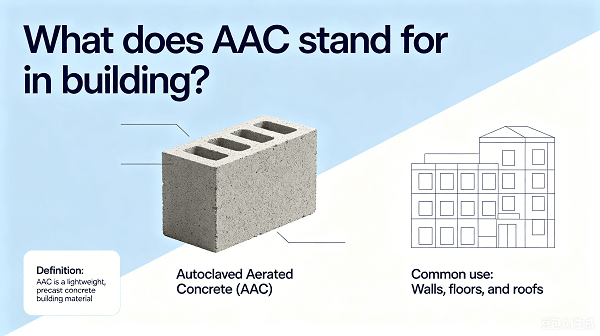
AAC means autoclaved aerated concrete in building. AAC is a light concrete. Builders use it for many jobs. This material is precast. It has special features. These features make it different from other materials. The AAC market will grow a lot. AAC is versatile and efficient. Many projects use AAC plant manufacturers. They help keep the quality consistent.
What is AAC
AAC Definition
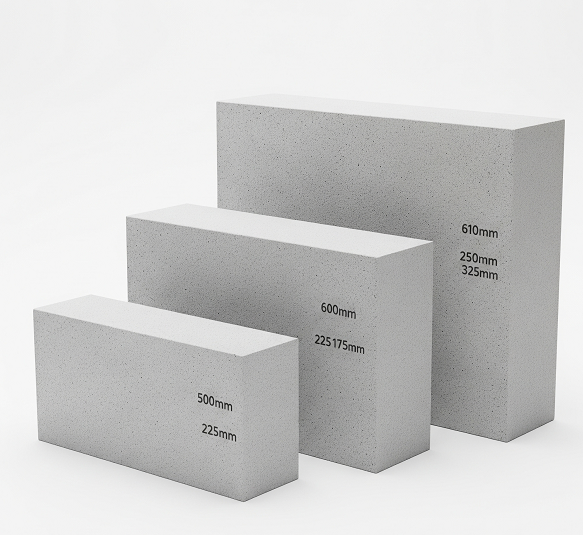
AAC stands for autoclaved aerated concrete. This material is a kind of lightweight concrete. Builders like AAC because it is precast and simple to use. You can spot AAC by its special cellular structure. Manufacturers make AAC by mixing fine sand or fly ash, lime, cement, and water. They add aluminum powder to help the mix expand. The mixture makes gas bubbles that grow inside the material. After shaping, the blocks or panels go into an autoclave. The high heat and pressure in the autoclave make AAC strong and steady. AAC meets building codes like ASTM C1386-98 and ASTM C1452-00. It also passes fire and earthquake safety tests.
AAC Properties
AAC has many features that make it different from other building materials. AAC is much lighter than regular concrete. Its density is between 400 and 800 kg/m³. Regular concrete is heavier, with a density of 2,200 to 2,400 kg/m³. Because AAC is light, it is easy to move and put in place. You can use AAC as blocks or panels for your project. The cellular structure helps AAC keep heat in or out. This means you save energy because buildings stay warm in winter and cool in summer. AAC blocks can be strong, reaching up to 7.8 MPa. This is good for both inside and outside walls.
Tip: AAC blocks are simple to cut and shape. You can fit them well, so you waste less material on your job site.
AAC also does well in fire. Its minerals and tiny holes help it pass fire tests. AAC keeps out pests, mold, and moisture. This means your building will last longer and need less fixing. AAC is good for the environment. It has a smaller impact than regular concrete. AAC lets vapor pass through, which helps control indoor humidity and makes buildings more comfortable.
Here is a table that compares the density of AAC and regular concrete:
Material | Density Range |
|---|---|
AAC | 400–800 kg/m³ |
Concrete | 2,200–2,400 kg/m³ |
AAC blocks come in different types for different jobs:
Block Type | Average Compressive Strength (MPa) | Minimum Compressive Strength (MPa) |
|---|---|---|
Interior wall blocks | ≥3.5 | ≤2.8 |
Exterior wall blocks | ≥5.0 | ≤4.0 |
You can use AAC for both main and extra parts of a building. The factory makes AAC with tight rules for size and shape. This means you do not need to trim or finish much on site.
AAC Composition
It is important to know what is in AAC. The main parts are:
Finely ground sand or fly ash
Lime
Portland cement
Water
Aluminum powder (used to make foam)
Sometimes, manufacturers use fly ash from coal plants instead of sand. The aluminum powder reacts with the other parts to make tiny air pockets. These air pockets make AAC light and good at keeping heat in or out.
Here is a table that shows the main parts of AAC:
Component | Description |
|---|---|
Aggregate | Finely ground sand or fly ash |
Binding agents | Lime, cement, water |
Foaming agent | Aluminum powder (0.05–0.08% by volume) |
Alternative aggregate | Fly ash (50–65% silica) from coal-fired plants |
The mix of these parts gives AAC its strength, insulation, and easy use. You can cut AAC for wires and pipes. AAC can be recycled and stays strong over time. AAC is a smart pick for green and efficient building.
AAC in Construction
AAC Applications
AAC building systems can be used in many ways. They are good for walls, floors, and roofs. You can find AAC in homes and big buildings. Shopping malls, hospitals, hotels, and supermarkets use AAC too. More businesses and public places are starting to use AAC. AAC building systems give strong walls and outside covers. In Europe, AAC is very common. In Germany, 60% of new buildings use AAC. AAC does not burn easily and is light. This makes it great for saving energy in buildings. Governments like AAC because it helps build in a green way.
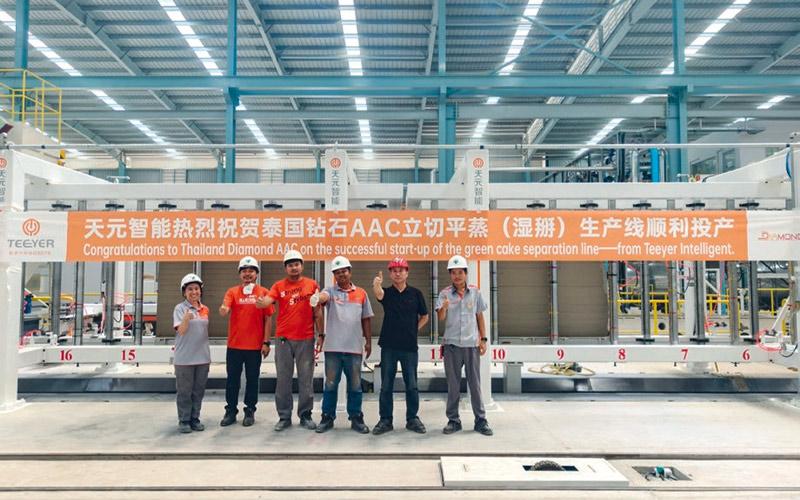
Teeyer has executed over 1,200 green AAC projects globally. Key examples include the Kazakhstan UNITON plant (180,000m³/year, 11 months delivery) and the Thailand Diamond project featuring the first overseas deployment of Teeyer's proprietary GREEN SEPARATION technology.
Benefits of AAC
AAC building systems have many good points. They keep heat in or out, so buildings stay comfy. This also means you pay less for energy. AAC blocks save about 10% energy when used. They also need less energy to make and move than bricks. The R-value for a 200 mm AAC wall is 1.43. This is much better than regular concrete blocks. You can save up to 20% on heating and cooling. AAC also keeps noise out, so rooms are quieter. AAC panels can stop fire for over six hours. Pests like bugs and mice cannot get into AAC. The tight blocks do not let pests hide or enter. AAC building systems are easy to cut and shape. This means less waste and faster building.
Note: AAC is a top pick for energy-saving and green building. It is strong, keeps heat in or out, and lasts a long time.
Aspect | AAC Blocks | Traditional Bricks |
|---|---|---|
Energy savings in use | ~10% | N/A |
Energy for production | 3.6 GJ | 62 GJ |
Energy for transport | 0.45 GJ | 1.8 GJ |
Choosing an AAC Plant Manufacturer
Picking the right AAC plant manufacturer is very important. You want one that uses good materials and follows rules. The water-to-ash mix and steam process make AAC strong. Taking care of the blocks while they cure is needed. This means watching the heat and wetness. Good AAC plant manufacturers give you good prices and save energy. How much they can make and their machines matter for big jobs. Governments want more green materials, so AAC is in demand. AAC is light, so it costs less to move and does not weigh down buildings. Cities are growing, so AAC building systems are a smart pick.
Teeyer offers 35+ years of AAC expertise, 1,200+ global lines, remote diagnostics, MES optimization, waste-heat recovery, and full lifecycle support to maximize your ROI and green building credentials.

When you pick AAC for your building, you get many good things. AAC helps you build faster. It can stand up to fire for a long time. AAC is strong and lasts many years. You also save money because it costs less. Using AAC is better for the planet. It lowers carbon and saves energy. Choose AAC and good makers for safe and strong buildings.
Advantage | Description |
|---|---|
Faster build | AAC blocks help you finish building quickly |
Fire resistance | AAC can handle fire for many hours |
Durability | AAC stays strong and does not get mold |
Cost savings | AAC helps you spend less on materials and energy |
Soundproofing | AAC keeps noise out of rooms |
Safe materials | AAC is made with safe, non-toxic parts |
Energy efficiency | AAC keeps heat in or out and saves energy |
AAC is good for the earth because it has a small carbon footprint.
AAC uses less energy and fewer things than old building ways.
AAC helps you follow green building rules.
FAQ
What makes AAC different from regular concrete?
You get a lighter material with AAC. It has air pockets that help with insulation. You can cut and shape AAC blocks easily on site.
Can you use AAC blocks for load-bearing walls?
Yes, you can use AAC blocks for load-bearing walls. They offer good strength and meet building codes for many types of structures.
Is AAC safe for the environment?
You help the environment by choosing AAC.
AAC uses less energy to produce.
You reduce waste and lower your building’s carbon footprint.


