


Key equipment needed for an AAC production line
You need strong equipment to keep your AAC production line working well. Each system is important in the autoclaved aerated concrete process. These systems affect how much you can make. The table below shows the main equipmentyou will use. These tools help you get better quality, more automation, and save energy in the whole line:
Equipment Type | Description |
|---|---|
Mixing and Batching System | Mixes raw materials to keep quality and amount steady. |
Cutting Machine | Cuts blocks to the right size for quality checks. |
Molding System | Shapes the slurry into blocks with a special molding machine. |
Autoclave | Uses steam to cure blocks for better quality and energy savings. |
Material Handling Equipment | Moves blocks quickly with machines and control systems. |

You should pay attention to maintenance and safety features. You also need to focus on automation and control systems. Quality control and monitoring are important at every step. Good maintenance keeps your equipment working well. Automation helps you make more blocks and improves quality. Saving energy and being sustainable depend on using the right equipment and setting up the line correctly.
Teeyer’s DCS automation, real‑time monitoring, and waste heat recovery ensure low maintenance, high quality, energy savings, and sustainable AAC production with smart control systems.
Raw Material Preparation
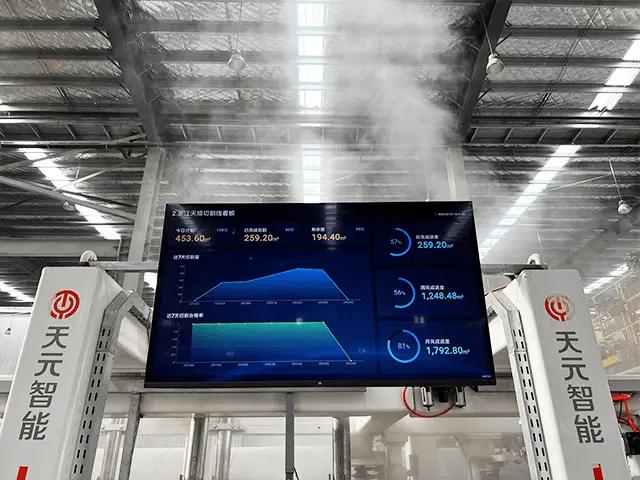
You begin making AAC blocks by getting the raw materials ready. This step is important for making strong blocks. You must handle each material carefully to get good results.
Jaw Crusher
The jaw crusher breaks big limestone pieces into smaller ones. This makes the rocks small enough for other machines. Crushing the limestone helps the next steps go smoothly. When the pieces are the same size, your AAC blocks stay good quality.
Ball Mill
The ball mill turns sand and gypsum into a fine powder. You need this powder to mix for AAC blocks. Grinding makes the materials mix well later. If you use a good ball mill, your mix is smooth and even. This stops weak spots from forming in your blocks.
Note: How you prepare raw materials changes how your AAC blocks turn out. You must keep the mix the same every time. Even small changes can make blocks weak or cause uneven growth.
Bucket Elevator
The bucket elevator lifts heavy materials to higher spots. This machine makes your work faster and safer. It keeps your work area neat and helps things run well. You can count on it to send materials to silos or mixers without waiting.
Silo System
A silo system keeps your raw materials safe and dry. Silos store powders so they are ready to use. Sealed storage and arch-breaking tools stop clogs and keep things clean. You get a steady flow of materials for mixing and batching. This helps your AAC line work without problems.
Equipment Type | Function Description |
|---|---|
Gives the right grinding for sand and gypsum. | |
AAC Slurry Storage Tank Mixer | Mixes and stores slurry, keeping the liquid level even. |
Lime Jaw Crusher | Breaks big limestone into smaller pieces for more steps. |
Bucket Elevator | Moves heavy materials up, helping the line work well. |
A good silo system stores and lets out raw materials well.
Sealed storage and arch-breaking tools stop clogs and keep things clean.
Steady flow keeps your mixing and casting steps working right.
You need to focus on raw material preparation to make strong AAC blocks. Automated weighing and dosing systems help you use the right amounts. This step is important for a smooth and fast AAC production line.
Slurry Preparation Section
Mixer
A mixer is needed to make AAC slurry. This machine mixes sand, cement, lime, water, and aluminum powder. It makes sure the mixture is even every time. You can pick different mixers for your plant size and how much you want to make each day. Industrial mixers come in many sizes and speeds. This helps you match what your factory needs. The table below shows some mixer models and their features:
Model | Capacity (m³) | Mixing Speed (rpm) |
|---|---|---|
Φ1500*5700 | 3.5-6 | 130 |
Φ1830*7000 | 7.5-17 | 245 |
Φ2200*7500 | 12-25 | 380 |
Φ2400*8000 | 15-30 | 570 |
Φ2700*8000 | 18-40 | 710 |
Φ3200*4500 | 20-45 | 800 |
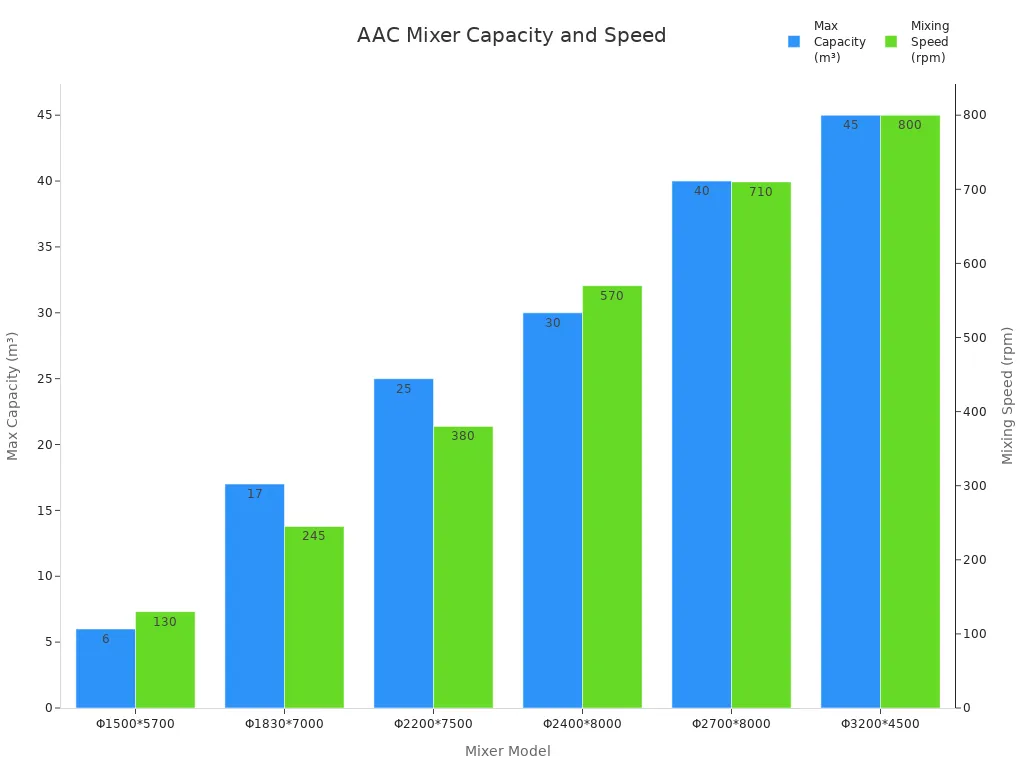
Some mixers use special designs to mix aluminum powder well. This stops weak spots from forming in blocks. Smart systems and sensors help you watch the mixing process. They make sure the mix stays the same every time. Energy-saving mixers use less power and help you save money.
Dosing Equipment
Dosing equipment measures each ingredient very carefully. This is important for making good AAC blocks. You must get the amounts right for the chemical reaction. The bubbles formed give AAC its special look. Accurate dosing keeps the blocks strong and even.
Sensors check the mixing cycle and how thick the mix is.
Control systems stop mistakes from manual mixing.
Keeping the room temperature steady helps the reaction.
Metering systems weigh materials using set formulas.
Ingredients go into the mixer in order.
Smart controls run the whole mixing process.
Automatic systems let you change things quickly.
Digital pumps change liquid and solid amounts fast.
Computer batching keeps the mix close to perfect.
Ball mills make the slurry smooth and even.
Lime tests make sure there is enough calcium.
Dosing equipment helps you waste less and work faster. New plant designs and better material mixes are becoming popular. These trends help you make blocks quicker and better. Using carbon-neutral methods helps protect the environment.
Tip: Buying modern dosing equipment helps you make better AAC blocks every time.
AAC Block Making Machine
Pouring Machine
A pouring machine is important for your AAC block making machine. This machine puts the mixed slurry into molds very carefully. It spreads the slurry so every mold gets the same amount. This helps the blocks grow and stay the same size. When you use a good pouring machine, your blocks look smooth. The blocks also have even surfaces. This makes your finished blocks better. The pouring machine works by itself, so people do not have to do as much. This makes your AAC block making machine line faster. You can use this machine to make many blocks quickly.
Tip: Teach workers how to use the pouring machine safely. They should always wear safety gear. Check safety buttons and devices often. Do safety checks to keep your AAC block making machine safe.
Moulds
Moulds are very important in the AAC block making machine. You use steel molds with a special spray so slurry does not stick. You pour the slurry into the molds to a certain height. The mix grows bigger when aluminum powder reacts with lime and water. This makes hydrogen gas and tiny bubbles. These bubbles give AAC its special look. The mix can get up to half bigger than before. After pouring, you let the mix sit for a few hours. It turns into a soft "green cake." You make the top flat so the cake is the right size. This helps the next step go well.
Use strong and exact molds.
Check and fix molds often.
Stop mistakes or bad spots in your AAC blocks.
Keep molds nice so blocks are the same size and smooth.
If you do these things, your AAC block making machine will make good blocks every time.
Pre-curing Process
Pre-curing Chamber
You need a pre-curing chamber to help your AAC blocks gain strength before cutting. This chamber creates a safe space for the green cake to harden. You place the molds inside the chamber after pouring the slurry. The chamber keeps the environment steady, so the blocks do not crack or deform. You can control the temperature and humidity to match the needs of the AAC process. The chamber design affects how fast the green cake hardens and how strong it becomes. If you use the right settings, you get blocks with smooth surfaces and even shapes.
Here is a table showing key parameters for the pre-curing chamber:
Parameter | Description |
|---|---|
Temperature | The pre-curing process occurs at temperatures between 35°C to 40°C, ensuring uniform curing. |
Humidity | Controlled between 50% and 70% to prevent surface cracks and uneven curing. |
Duration | Lasts between 2 to 4 hours, allowing the green cake to achieve sufficient hardness. |
Tip: You should check the chamber often. Make sure the settings stay steady. This helps your AAC blocks reach the right hardness for the next step.
Temperature Control
Temperature control plays a big role in the pre-curing process. You must keep the chamber between 40°C and 50°C. This range helps the green cake keep its pore structure and gain strength. If the temperature drops too low, the cake stays weak. If it gets too high, you see cracks or deformation. These problems change the microstructure of AAC blocks and lower their quality. You can use sensors and control systems to watch the chamber. Adjust the settings if you see changes. This keeps your AAC machine line running smoothly and helps you make strong blocks.
Use automatic controls to keep the chamber steady.
Watch for changes in temperature and humidity.
Fix problems fast to protect your AAC blocks.
Note: Good temperature control helps you avoid defects and keeps your AAC production line efficient.
Cutting Station in AAC Production Line
The cutting station is a key part of your AAC line. This area shapes the green cake into AAC blocks. You need to focus on making sure the cuts are exact. Good cuts mean you do not waste blocks or redo work. This helps your line move fast and saves materials.
Cutting Car
The cutting car moves the green cake through the cutting area. It holds the soft cake still as it goes on the rails. If the cake shakes, it can break or lose its shape. A strong cutting car keeps the cake safe and helps you get straight cuts. You should check the car often to make sure it works well and does not slow down your AAC process.
Pinion and Rack Rail
The pinion and rack rail system guides the cutting car very carefully. This system lets you control how fast and where the car goes. A steady rail and strong pinion stop shaking and keep the wires tight. This helps you cut even slices and makes sure your AAC blocks are the same size. The table below shows what affects how well your cutting station works:
Parameter | Operational Range | Impact on Efficiency | Production Benefit |
|---|---|---|---|
Wire tension | Stable controlled range | Reduces cutting deviation | Higher yield rate |
Frame rigidity | High structural stiffness | Prevents vibration | Consistent sheet dimensions |
Positioning accuracy | Millimeter level control | Improves repeatability | Lower scrap ratio |
Automatic Cutting Machine
The automatic cutting machine is the main part of the cutting station. It uses wires or blades to cut the green cake into blocks. Modern machines can cut blocks within a few millimeters of the right size. You get blocks that fit your plans every time. Good cutting can lower waste by up to 20 percent compared to old ways. With careful cutting, waste can be less than 3 percent. Manual cutting can waste up to 10 percent. Automatic machines also fix rough edges, so your blocks fit together better later.
Tip: Buy a good automatic cutting machine. This helps you save materials, cut waste, and keep your AAC line working well.
Autoclave Equipment
Autoclave
You need a reliable autoclave to finish the aac production process. The autoclave is a large pressure vessel where the autoclaving process takes place. You place the green blocks inside, and the machine uses high-pressure steam to cure them. This step is key for making strong and durable aac blocks. The autoclaving process changes the raw mix into a solid, lightweight product. You must choose the right size and pressure rating for your plant. The table below shows common autoclave sizes and their main features:
Parameter | Φ1.65×21 | Φ2.0×21 | Φ2.5×24 | Φ2.85×26 | Φ3.0×23 |
|---|---|---|---|---|---|
Inner Diameter (m) | 1.65 | 2.0 | 2.5 | 2.85 | 3.0 |
Body Length (m) | 21 | 21 | 24 | 26 | 23 |
Rated Pressure (MPa) | 1.1/1.4 | 1.4 | 1.4/1.6 | 1.6 | 1.6 |
Max. Operating Pressure (MPa) | 1.0/1.3 | 1.3 | 1.3/1.5 | 1.5 | 1.5 |
The autoclaving process has three main phases. First, you raise the pressure and heat the vessel to 180-200°C. Next, you keep the pressure steady for 6 to 10 hours. This soaking phase helps the blocks form strong crystals. Last, you lower the pressure slowly. The table below explains each phase:
Phase | Duration (hours) | Impact on AAC Blocks |
|---|---|---|
Pressure rise | 1.5 - 3 | Heats the vessel to 180-200°C |
Constant-pressure soaking | 6 - 10 | Crystallization of tobermorite, enhancing strength and durability |
Depressurization | 1.5 - 3 | Finalizes the cycle |
Tip: You should monitor the autoclaving process closely. This helps you avoid defects and keeps your aac blocks strong.
Steam Supply
A stable steam supply is vital for the autoclaving process. High-efficiency boilers give you the steady steam needed for proper curing. When you control the steam well, you help the aac blocks reach their best strength and durability. The autoclaving process depends on even heat and pressure. If the steam supply drops or changes too much, you may see cracks or weak spots in your blocks.
You should use a modern steam supply system with precise controls. This helps you avoid pressure collapse and keeps the autoclaving process safe. Good steam regulation also saves energy and lowers costs. When you use the right machine and keep your system efficient, you get better results from your aac production.
Note: The quality of your steam supply directly affects the final strength and life of your aac blocks. Always check your system for leaks or drops in pressure.
Handling and Packaging Equipment
You need good handling and packaging equipment for your aac line. This step happens after molding and demolding. You must move, protect, and store your aac blocks carefully. Each machine helps your production stay fast and keeps blocks high quality.
De-moulding System
The de-moulding system takes the green cake out of molds. You use it after molding and demolding. This system keeps the aac cake in good shape. A strong de-moulding system stops cracks and keeps surfaces smooth. You can pick automatic or semi-automatic systems. Automatic systems save time and lower damage. Check the system often to keep your aac machine working well.
Tip: Clean molds after every cycle. This keeps the process smooth and stops defects.
Packing Machine
A packing machine wraps your aac blocks before shipping. Stretch film machines cover blocks to keep out dust and water. This step protects your products during transport. The packing machine works quickly and makes neat packages. You can change settings for different block sizes. Some lines use an automatic plate breaking machine before packing. This machine breaks blocks into sizes customers want.
Here is a table showing common handling and packaging equipment in aac plants:
Equipment Type | Function Description |
|---|---|
Finished Product Lifting | Lifts blocks after cooling from the autoclave. |
Automatic Plate Breaking Machine | Breaks blocks into sizes for packaging. |
Stretch Film Machines | Wraps blocks for protection during transport. |
Forklift | Stacks blocks in the finished product yard. |
Palletizing System
The palletizing system stacks packed blocks onto pallets. You use this system to organize products for storage or shipping. An automatic palletizing system uses a robotic arm. It picks up blocks and puts them in a set pattern. This system works faster than people stacking by hand. You see fewer mistakes and less damage. Automated palletizing lowers labor costs and makes work safer. You need fewer workers and get more blocks each shift.
Faster work and higher efficiency.
Safer workplace and lower labor costs.
Better use of storage space.
Consistent stacking and fewer mistakes.
Real factories show these benefits. For example, a plant in Ji’an, Jiangxi Province, switched to a fully automatic line. The new system cut the number of workers per shift from many to just three. You get faster cycles and more finished blocks ready for delivery.
Note: Pick a palletizing system that fits your aac production needs. This keeps your workflow smooth and your plant competitive.
Every part of the aac production line is important. Each machine helps the process run well and keeps aac blocks strong. You need the right equipment from start to finish. This makes sure your blocks are good quality and made quickly. Some problems can happen, like blocks breaking or workers not working fast. Sometimes, blocks are not all the same, or people can get hurt.
Using machines that work by themselves can help stop these problems.
Moving and tilting blocks gently keeps them from breaking.
Companies can change your aac production line to fit your needs and money.
To get the best blocks, ask experts for help. They can make special plans and give you support for your aac production line.
FAQ
What is AAC and why do you use it in construction?
You use AAC because it is a lightweight, strong building material. It offers good insulation and fire resistance. You can cut and shape it easily. Many builders choose AAC for faster and safer projects.
How does the AAC production line improve quality?
You get better quality with an AAC line because machines control each step. Automated systems mix, pour, and cut blocks with high accuracy. This reduces mistakes and keeps your blocks consistent.
What safety measures should you follow in an AAC plant?
You must wear safety gear and follow all rules. You should check machines before use. Always keep your work area clean. You need to train workers on emergency steps.
How do you maintain AAC equipment for long life?
You clean and inspect machines often. You replace worn parts quickly. You keep records of repairs. Regular checks help you avoid breakdowns and keep your AAC line running.
Can you customize an AAC production line for different block sizes?
Yes, you can adjust machines to make many block sizes. You change molds and cutting settings. This lets you meet different project needs with your AAC blocks.


