


Emerging Trends in Lightweight Building Materials for 2026
The construction industry is undergoing a quiet revolution. Across residential, commercial, and infrastructure projects, builders are moving away from traditional heavy materials and embracing smarter, lighter alternatives. In 2026, the shift is no longer a niche preference—it is a market imperative. Lightweight building materials are now at the center of how the world builds faster, cheaper, and greener.
AAC block technology stands at the forefront of this transformation. Autoclaved Aerated Concrete (AAC) blocks are three times lighter than traditional red bricks, load-bearing, high-insulating, and durable. They represent one of the most mature and widely adopted lightweight solutions in the global construction market. And the numbers tell a compelling story.
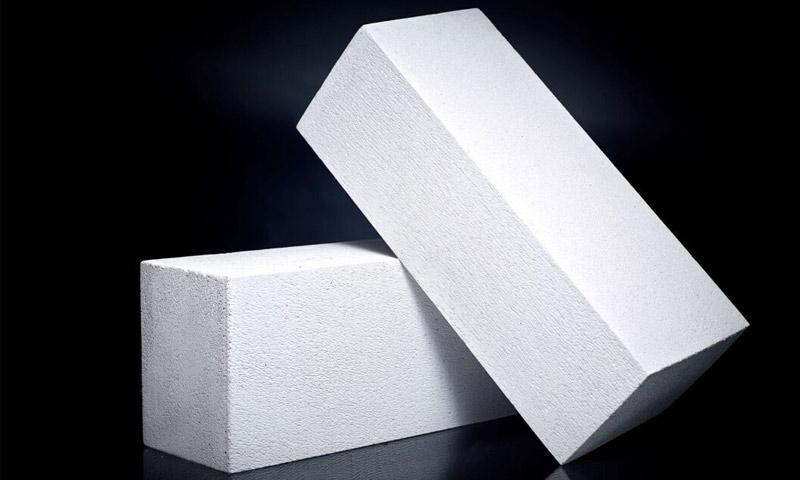
Trend 1: Rising Replacement of Traditional Clay Bricks with AAC Blocks
Perhaps the most significant trend in 2026 is the accelerating replacement of traditional clay bricks with AAC blocks, particularly in urban infrastructure projects. This shift is driven by multiple factors:
Weight and logistics. AAC blocks weigh roughly one-third of traditional clay bricks. This translates directly into lower transportation costs, reduced structural load on buildings, and simpler on-site handling.
Thermal and acoustic insulation. AAC's porous structure provides superior insulation—one of the fastest-growing reasons for its adoption. Buildings constructed with AAC blocks require less heating and cooling, directly reducing operational energy costs.
Construction speed. AAC blocks are manufactured with high precision and low dimensional tolerance. Their larger size and lighter weight allow masons to construct walls up to three times faster than conventional bricks. In an industry where time is money, this is a decisive advantage.
Sustainability. AAC blocks typically incorporate fly ash—a by-product of coal combustion—offering an eco-friendly alternative to traditional brick production. Life-cycle studies report 20–40% less embodied CO₂ compared to fired clay brick masonry. As carbon-neutral construction becomes a priority in 2026, AAC is reinforcing its position as a preferred material for environmentally compliant building projects.
Trend 2: Smart and Enhanced AAC Formulations
Innovation in lightweight building materials is not static. In 2026, researchers and manufacturers are pushing the boundaries of what AAC can do.
Phase-change material integration. Recent studies have explored the use of microencapsulated phase change materials (MPCM) in AAC bricks. These thermally smart building envelopes can store and release heat, significantly improving energy performance in warm climates. Other research has investigated biocomposite phase change materials as a passive thermal energy storage solution for AAC bricks.
Performance enhancements across climates. Researchers are now evaluating MPCM-enhanced AAC bricks combined with auxiliary heating systems for cold and freezing climates. This means AAC is becoming a year-round, all-climate solution rather than a material limited to moderate environments.
Advanced AAC formulations. The development of advanced AAC formulations is a major trend in the forecast period, with growing adoption in commercial high-rise projects. These innovations are expanding AAC's applications beyond traditional residential walls into structural and high-performance building systems.
Trend 3: Fast and Efficient Construction Solutions
The global construction industry faces persistent pressure to accelerate project timelines. Lightweight building materials are a direct answer to this challenge.
Accelerated project completion. AAC products are crucial for satisfying high-volume demand because their lightweight nature significantly shortens project durations. In regions like Southeast Asia, where construction activity peaks after holiday breaks, AAC blocks allow builders to catch up on schedules rapidly.
Reduced labor costs. AAC blocks are lightweight and easy to handle, leading to faster construction times and reduced labor costs. With skilled labor shortages affecting construction markets globally, this efficiency advantage is increasingly valuable.
Prefabrication and modular construction. The expansion of AAC panels and precast elements in construction projects is a growing trend. Prefabricated AAC components allow for off-site manufacturing and on-site assembly, further compressing project timelines.
Trend 4: Sustainability and Green Building Certification
Green building certifications are reshaping material selection. LEED, BREEAM, and other rating systems are driving demand for materials that reduce environmental impact.
Green building boom. As of 2024, LEED is the most widely used green building rating system worldwide, with over 195,000 certified projects across 186 countries. The rising demand for green building construction is directly driving the growth of the AAC market.
Policy-driven sourcing. The outlook for 2026 is driven by policy-driven sourcing decisions, domestic manufacturing incentives, and strategic supplier realignment. Governments are increasingly favoring materials that support carbon reduction targets.
Circular economy alignment. Sustainable AAC blocks are eco-friendly building materials recognized for their lightweight nature, high thermal insulation, and lower environmental impact. Their use of industrial by-products like fly ash aligns with circular economy principles.
Trend 5: Urban Infrastructure Expansion
Cities are growing, and the infrastructure to support them must be built efficiently.
Urban infrastructure projects. The expansion of AAC usage in urban infrastructure projects is a defining trend of the forecast period. Infrastructure developments necessitate the use of lightweight, high-insulating AAC blocks, noted for their durability and reduced weight compared to traditional bricks.
Smart city construction. The growth in urbanization and smart city construction projects is expected to accelerate AAC adoption. As cities become denser, the need for lightweight, fire-resistant, and energy-efficient building materials becomes more acute.
Residential and commercial expansion. The AAC blocks and panels market is driven by applications across residential, commercial, industrial, and infrastructure construction projects. The reduction in structural dead load offered by AAC is enabling more efficient building designs.
How Teeyer Supports the Shift to Lightweight Building Materials
Teeyer Intelligent Equipment Co., Ltd. has been at the forefront of AAC production technology for over 35 years. With more than 1,200 AAC production lines delivered globally and nearly 200 exported to over 30 countries, Teeyer provides the equipment and expertise that enable builders to capitalize on these trends.
Proven global experience. Teeyer has executed landmark AAC projects across continents—from the Kazakhstan UNITON project, which delivers a fully customized 180,000m³/year plant with flexible daily capacity from 300 to 1,000m³, to the Thailand Diamond project, featuring the first overseas deployment of Teeyer's proprietary GREEN SEPARATION technology.
Energy-efficient technology. Teeyer's AAC production lines integrate plant-wide steam energy management and waste heat recovery systems, helping manufacturers reduce operational costs while producing sustainable building materials.
Comprehensive support. From pre-investment raw material testing at Teeyer's provincial-level research center to full training, 007 spare-parts support, and remote diagnostics, Teeyer ensures that AAC producers can meet the growing demand for lightweight, sustainable construction materials.
OCMC (Omni Carbon Mineralization Concrete) technology.Teeyer partners with CarbonMiner to advance OCMC (Omni Carbon Mineralization Concrete) technology for AAC blocks, integrating intelligent equipment with CarbonMiner's core mineralization technology to enable permanent CO₂ storage in building materials. Teeyer contributed to China's first carbon-sequestering ALC panel production line in Anji, marking the leap from lab research to industrial-scale production of carbon-sequestering building panels. Through this joint venture, Teeyer delivers integrated "Equipment + OCMC" solutions, helping manufacturers produce sustainable building materials with verified carbon reduction—CarbonMiner has already obtained China's first carbon footprint verification for carbon-sequestering AAC blocks.
FAQ
A: AAC blocks contain approximately 80% air by volume, making them about one-third the weight of traditional clay bricks. This reduced weight lowers transportation costs, reduces structural load on buildings, and enables faster construction.
A: Yes. AAC blocks often incorporate fly ash, an industrial by-product, reducing the need for virgin raw materials. Life-cycle studies report 20–40% less embodied CO₂ compared to fired clay brick masonry. They also improve building energy efficiency through superior thermal insulation.
A: The five major trends are: (1) replacement of traditional clay bricks with AAC blocks, (2) development of advanced AAC formulations, (3) growing preference for fast and efficient construction solutions, (4) rising adoption for thermal and acoustic insulation, and (5) expansion of AAC usage in urban infrastructure projects.
A: AAC blocks allow masons to construct walls up to three times faster than conventional bricks due to their larger size, precision manufacturing, and lighter weight.


